

The way we work continues to evolve, and so do the spaces we work in. Office design trends for 2026 reflect a clear shift away from static layouts towards flexible, human-centred and future-proof environments. Offices are no longer just places to work, they are spaces that support focus, collaboration and well-being.
So what can we expect from office design in 2026?
1. Adaptive Workspaces Become the New Standard
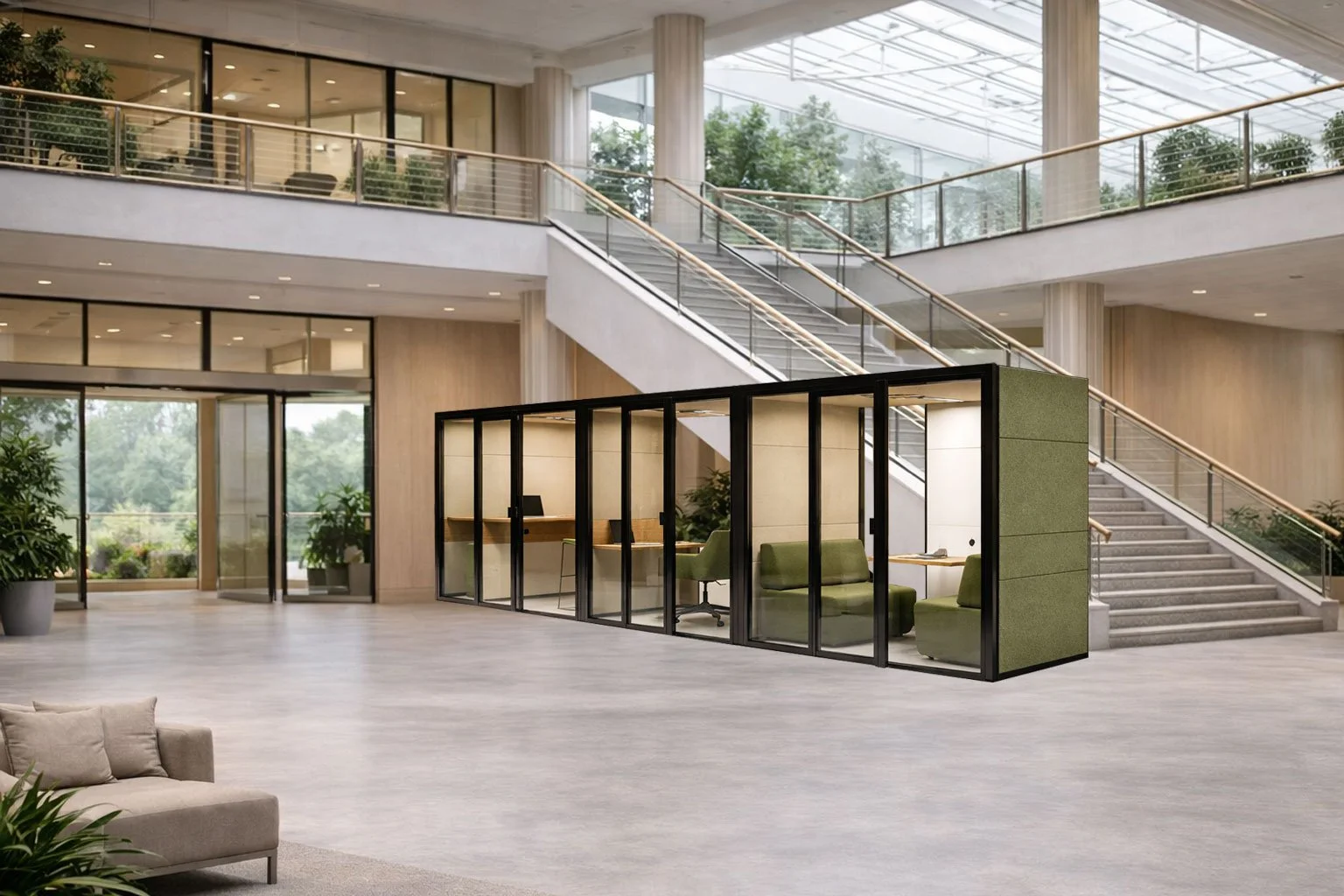
One of the most important office design trends for 2026 is adaptability. Fixed office layouts are giving way to spaces that can evolve over time. Teams change, organisations grow and working styles shift office environments must be able to follow.
Modular office design allows spaces to be reconfigured without major renovations. Meeting areas can transform into focus zones, and collaborative spaces can expand or shrink as needed. This flexibility not only supports hybrid working but also extends the lifespan of the office.
2. Acoustic Comfort as a Core Design Principle
As offices become more open and multifunctional, sound control becomes essential. In 2026, acoustic comfort is no longer an afterthought, it is integrated into the design from the very beginning.
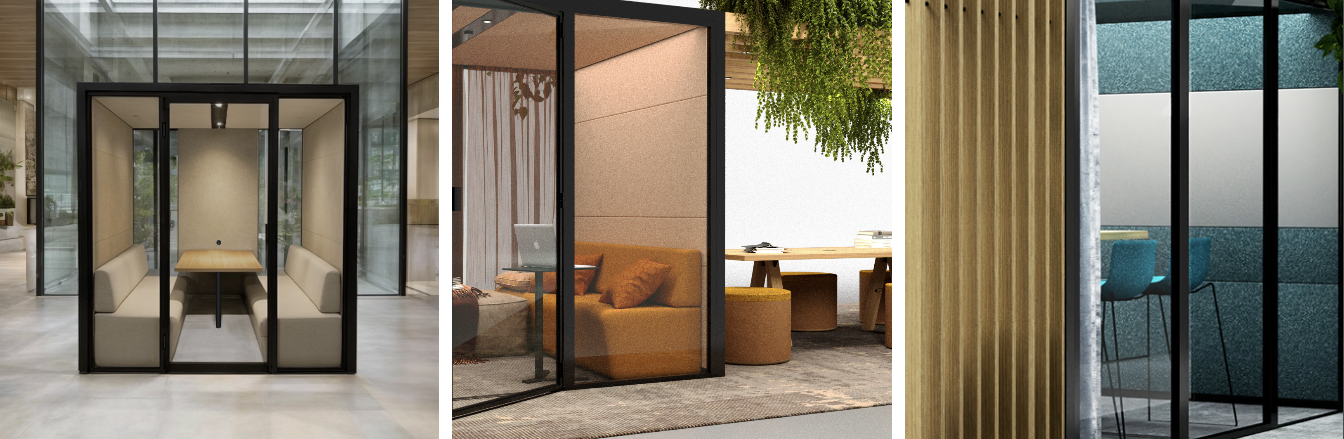
Dedicated acoustic zones such as phone booths, focus rooms and meeting pods help reduce noise distractions while maintaining openness. These solutions support concentration, privacy and productivity, especially in hybrid office environments.
Acoustic office solutions are a key component of future office design, balancing collaboration with moments of focus.
3. Office Design Fully Aligned with Hybrid Work
Hybrid work is no longer a temporary solution it is the norm. One of the defining office design trends for 2026 is the transformation of the office into a destination rather than a daily obligation.
Instead of rows of desks, offices feature:
Shared collaboration spaces
Informal meeting zones
Quiet areas for focused tasks
The office becomes a place for connection, creativity and teamwork, complementing remote work rather than competing with it.
4. Sustainability Through Longevity and Flexibility
Sustainability in office design goes beyond materials alone. In 2026, sustainable office interiors focus on long-term use, adaptability and reduced waste.
Modular systems and reusable components allow offices to evolve without demolition or replacement. This approach supports circular design principles and helps organisations reduce their environmental footprint while remaining flexible for the future.
Designing for change is one of the most sustainable choices an organisation can make.
5. Human-Centred Office Design Takes Priority
The final key trend in office design trends for 2026 is a strong focus on people. Comfort, well-being and experience are central to workplace design decisions.
This includes:
Improved indoor air quality
More natural light and visual calm
Spaces that support both collaboration and individual focus
A well-designed office supports productivity, reduces stress and creates an environment where employees feel comfortable and engaged.
Designing Offices for the Future
Office design in 2026 is about creating spaces that adapt, support people and evolve over time. Flexible layouts, acoustic comfort, hybrid-ready environments and sustainable thinking define the future office.
By embracing these office design trends for 2026, organisations can create workplaces that remain relevant, efficient and inspiring now and in the years ahead.
