

Two office Eco Pods may both publish a carbon figure, yet the numbers may describe different things. One could cover manufacturing only; another could include transport, replacement and end of life. A fair comparison starts with the Environmental Product Declarations behind the figures.
Check what each number represents
Find the declared unit, exact model and configuration. Is the figure for one complete Eco Pod, a square metre of material or a different unit? Compare products that provide a similar capacity and function. If their sizes or uses differ, the lower absolute number may not answer the design question.
Match life cycle boundaries
EPDs divide a life cycle into modules. Compare GWP-total for equivalent stages and note any modules that are excluded or based on different scenarios. Transport distances, service life, maintenance and end-of-life assumptions can change the result. Do not combine a manufacturing total from one declaration with a whole-life total from another.
Read the method and date
Look for the product category rules, EN 15804+A2 version where relevant, programme operator, verifier and validity period. Check whether the manufacturer has updated the product since the EPD was issued. A third-party verified declaration supports transparency, but comparison still requires judgement.
Consider long-term use
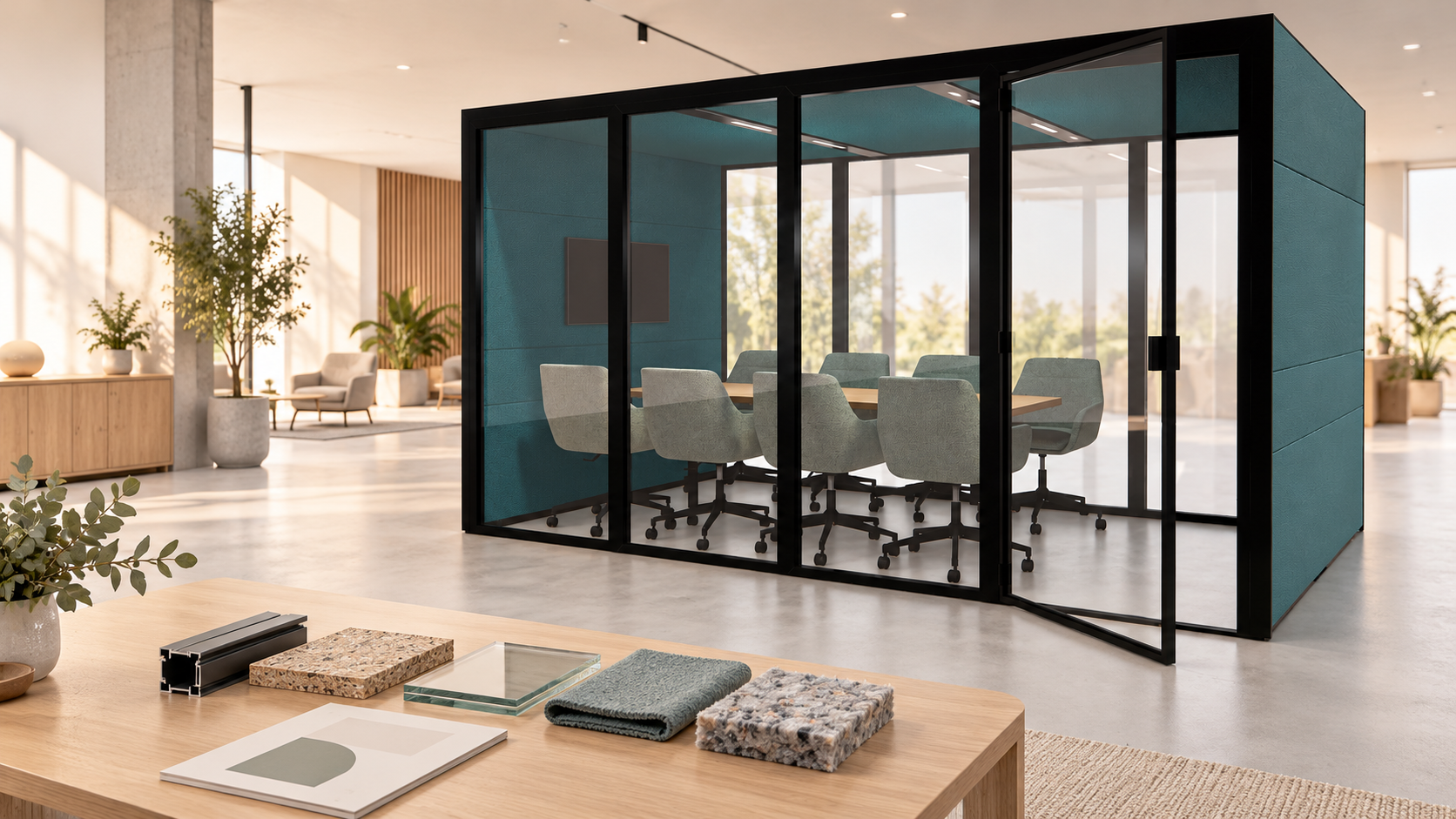
A product that can be repaired, reconfigured and used for longer may reduce the need for replacement. Those benefits need evidence and should not be assumed to erase reported impacts. Ecolution Design's modular grid allows components to be exchanged and selected Eco Pods to connect, which can support a changing layout.
Ask for the underlying documents
Ecolution Design publishes seven EPDs covering its range and an Eco Passport for each Eco Pod. Use the documents to check material content and impacts, then consider acoustics, accessibility and fit for purpose. Explore sustainability information and the Eco Pod collection.
